

🎧 LISTEN to this 5AM StoryTalk episode as audio here at Substack.
▶️ WATCH this episode at YouTube (or scroll down).
📖 READ this episode in essay form (scroll down).
I talk a lot about how important authentic dialogue is here at 5AM StoryTalk. That’s why I’ve partnered with Screenplay Performance Studio for today’s episode – a digital tool for screenwriters to hear their work performed when a table read isn’t possible (don’t worry, it meets my human-made arts standards). I gave it a test-drive with my “Dracula” pilot script and it was very trippy hearing my original text performed as intended. Stop guessing if your dialogue works. Try Screenplay Performance Studio today and use code 5AMStoryTalk to get $25 off your first use.
I could feel my heart beginning to race. The air pumping out of my lungs burned in my nostrils. My chest tightened as if someone was using their hands like vice grips to crush my ribcage.
I’d experienced this so many times before, and yet the panic still surprised me.
Should I hurl invectives at my laptop screen?
Better yet, should I just shatter my laptop against the wall?
Logic said to just start typing a pointed response to the script notes I had just been emailed – the kind of message that would utterly destroy the sender’s sense of their own intelligence…except, of course, that wouldn’t actually be logical.
Instead, I slapped my laptop screen shut and stalked away. It was the only smart thing to do, or so I’d learned over the years.
Receiving notes on your creative work — in this case, a screenplay — always provokes this response in me. It likely does for you, too.
It’s called fight-or-flight, and we evolved the instinct over millions of years to protect ourselves.
Today, it’s a constant liability to our ability to function in our personal and professional lives. In Hollywood, for example, it’s a quick route to being labeled an asshole and drummed out of the film/TV industry altogether.
You would think artists would develop “thicker skin”, as others might call it, but there’s no way to just cast aside a biological instinct more ancient than the human species.
Likewise, you would think those who give artists notes – from friends, to talent representatives, to producers and book publishers, to even other artists – would understand this…but they typically don’t.
So, let’s talk about why it’s so hard to receive notes on your art and the best way to give notes on someone else’s art.
These “rules” — and I hesitate to use that word, because the concept of “rules we must follow” in art irks me — might just save your life. Or at least your project and maybe even your professional future.
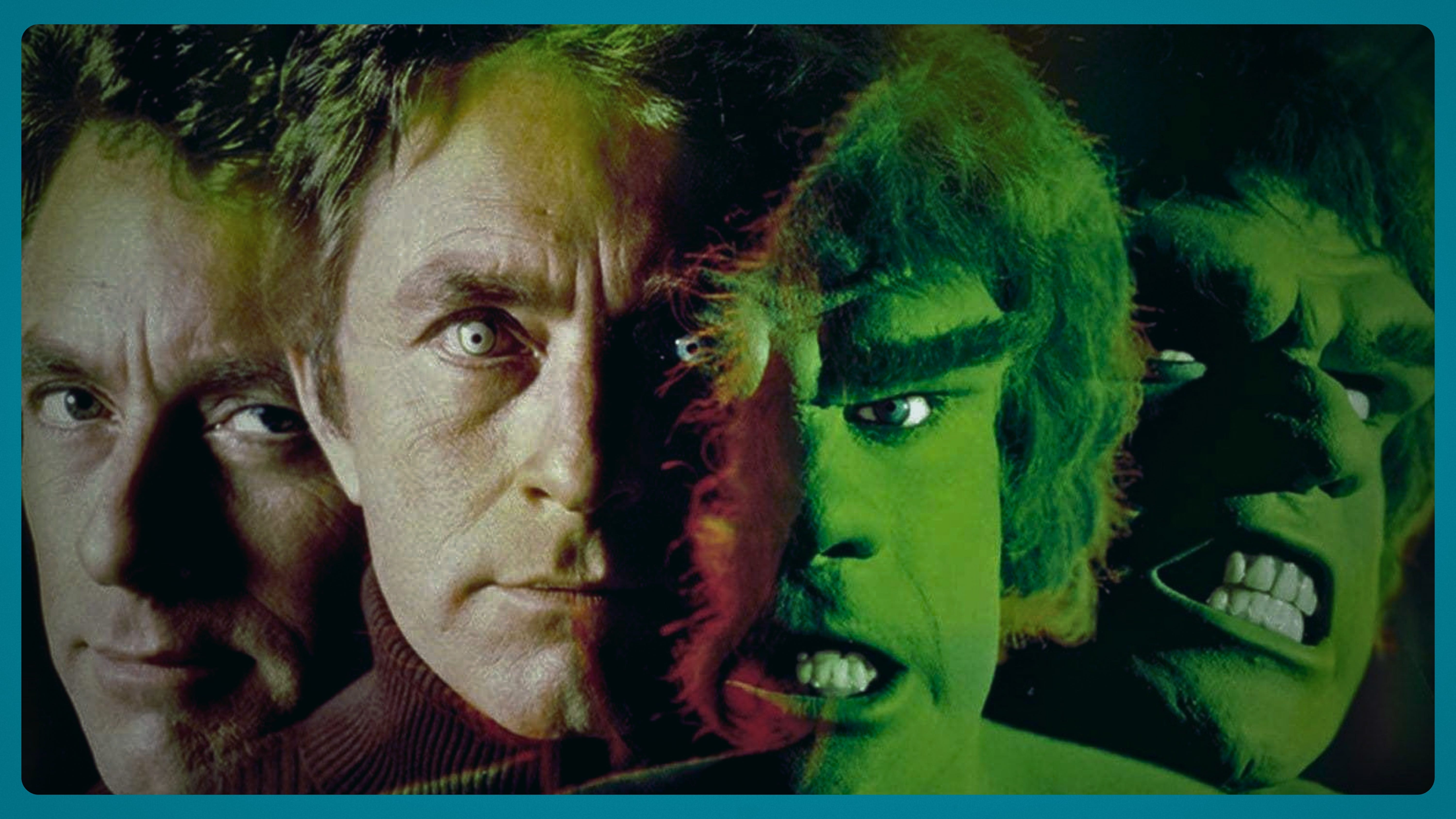
“YOU WOULDN’T LIKE ME WHEN I’M ANGRY”
The fight-or-flight response, also called the acute stress response, is a physiological reaction we have to anything we find terrifying as all fuck. Doesn’t matter if it’s a mental threat or a physical one. Doesn’t matter if the threat is to you, someone else, or, in the scenario I just described, my work on a screenplay.
When it happens, our sympathetic nervous system stimulates our pituitary and adrenal glands, which in turn releases a whole bunch of fun things like adrenaline, noradrenaline, and cortisol. The result is increased heart rate, blood pressure, and breathing rate. You can remain in this altered state for 20 to 60 minutes after the perceived threat has passed.
Why is this relevant to art and, in particular, receiving notes on our art?
If you have children, you will understand that anything that threatens them is experienced as a threat against you. About 25 years ago, my father, sister, and I were walking through a parking lot and a car began to reverse out of a parking spot right at us.
Before it ran my sister down, the brakes screamed and the car stopped, bumper mere inches from her. My father’s fist dropped like a thunder god’s hammer into the trunk lid, and he roared, “Watch where you’re going, asshole!”
My father didn’t think about what he was doing in this instance. His brain did it for him before he even understood what was transpiring because the danger to my sister registered as a danger to him. It told him murdermurdermurder or you’ll diediedie.
And so, he lashed out to protect both of them — but really himself.
Artists create artwork. They pour themselves into these works - their passions, their love and grief and traumas, everything that makes them them. The result is like a child, at least in our unconsciousness.
Consequently, notes that criticize these offspring, that pick them apart, that question their identities, are experienced by artists as an attack on themselves. It’s that perceived violence that triggers the fight-or-flight response.
HOW DO WE OUTSMART THE FIGHT-OR-FLIGHT RESPONSE AS ARTISTS?
The short answer: emotional preparation and learned response.
It took me a long time to begin to understand this, but I have to psych myself up to receive notes. I need to make sure my primitive lizard brain is essentially kept in a cage.
I breathe beforehand, I reassure myself, I remind myself about all the notes I’ve received that ultimately led to better scripts, books, or graphic novels.
Yes, many of the notes I’ve received have ruined projects — including my TV series “DRACULA”, which you can learn more about here — but there is no note, even bad ones, that can be beaten by force of will alone.
As for that learned response I referenced, this one requires more discipline in the moment.
You should avoid doing more than having a conversation about notes you disagree with – until you’ve walked away from the experience and your body has had the opportunity to recover from the hormones it’s just soaked up like a sponge.
Accept it as an axiom before you even walk into the room or get on the phone or sit down across from whomever at the coffee shop. Repeat it to yourself as you listen. Tie a string around your finger to help you remember, if necessary.
Basically, respond in such a way as to let the notes-giver know you’ve heard them, but don’t disagree. And don’t argue. Never argue. You’re not in your right mind, even if you think you are.
This doesn’t mean you shouldn’t interrogate the note. Bad notes and notes you disagree with both tend to have merit whether you like it or not. They tend to mean something and it’s your job to work out what that meaning is.
My friend Inside Out screenwriter Meg LeFauve describes notes “as the symptoms of a disease”—
and you can’t just ignore a disease, can you?
But remember, you have no opinion on said note, not until you’ve walked away from the experience and provided yourself a buffer between the hormones and reason.
By the way, you will mess up. I know all of this, and I still do. I still lose my patience as a writer. You will, too.
Let’s put it this way: these rules are “rules”, if you want to call them that, to mitigate the damage and help your project.
IS IT BETTER TO GIVE OR RECEIVE…NOTES?
As far as I’m concerned, there are only two types of people in the world who truly enjoy giving notes on another person’s artwork: those who seek to profit from said artwork and narcissists.
(Sometimes a person is both, but I’m not going to bother with narcissists here.)
In the first case, this typically means talent representatives and suits such as producers, book editors, and the like. Everything I’m about to say is relevant to you if you’re one of these people, so I encourage you to consider it along with everything I just wrote about how artists experience notes.
If you don’t fit into the groups I just described, then you are likely a fellow artist, peer, or friend/family member — or some combination of these — who has been asked to provide your opinion, wisdom, and maybe even expertise on someone’s work of art.
In other words, you’re giving notes as a favor and, to some degree, that favor is a chore. You could be finally getting around to watching “The Wire”, but instead you’re reading my script – which kind of makes me an asshole, I know.
Sorry in advance on behalf of all artists.
But here’s the thing, whoever you are, however you’re engaging in a conversation with someone’s art, you took on a responsibility when you either agreed to work with this artist or agreed to provide an opinion on this artist’s work.
That’s a burden, I know, but it’s one you accepted.
This means the biggest rule when giving notes is: take it seriously or don’t even bother.
HOW TO GIVE NOTES AND NOT ALIENATE ARTISTS
Here’s some advice on how to give notes. This is not a comprehensive list, but I think there’s much here to help you reflect and evolve and, most importantly, offer notes that will actually improve an artist’s work (and preserve their mental health).
Number 1: Before you engage with the artwork, ask what the artist needs from you.
In my case, I might tell a reader that I’m looking for help with the plot and my character arcs.
Sometimes it’s abstract, like, “I just want to know how it makes you feel.” And sometimes it’s as simple as, “I just need to make sure it makes sense. Tell me what your questions are.”
Number 2: Regarding questions, the more of them the better.
Going back to my friend Meg LeFauve, she said,
“I learned that asking questions can be the best way to give notes. To allow the dreamer in the writer to be present at the table, not just the analyzer.”
Let me illustrate that for you.
Two of my two favorite development experiences ever were with a British production company and an Italian one – Kate Lewis and Julia Walsh (who were running a company called Neon Ink at the time) and Francesca Longardi and Donatella Di Benedetto at Cattleya.
All four of them brilliant producers – in part because they don’t just throw out critiques, problems that need to be solved. They throw out questions to better understand and improve your work. “What is this scene about to you?” “What’s going on in her head?” “Why do you think he did that?”
This allows you to muse, rather than solve – which produces a lot more interesting work, I find.
This is a far more common experience outside of Hollywood, in part, I think, because Hollywood’s culture is inherently pugilistic. People will try to tell you it’s not, but conflict is baked into so many creative encounters.
In summary: ask…questions…when you’re giving notes. Ask a lot of them.
Number 3: Do not give notes on what you want a piece of artwork to be.
You are not relevant to this process.
The artwork is an expression of the artist and their creative ambitions, not yours.
Number 4: Start the conversation about the artwork with what works for you, what excites you, what moves you.
How did it make you feel? Without this context, all other questions and ensuing notes are pretty damn useless, as far as I’m concerned.
The reason: nobody trusts notes from someone who didn’t have any kind of emotional reaction to their work.
Number 5: As you get into notes about your concerns and confusion, remember your words can destroy an artist’s confidence.
These words can send them in the wrong direction and undo months or years of work.
I say this from personal experience. I’ve abandoned whole projects over bad notes, and it was only when I returned to them years later that I realized how far I’d been led astray by the shitty notes.
For example, my debut novel Psalms for the End of the World came into existence nearly a decade after a terrible response to a core storyline in it convinced me it wasn’t worth pursuing.
More recently, a very negative notes session caused me to shut down on the project for six weeks. I couldn’t even think about it despite trying to work on it. It seemed pointless to bother. When I snapped out of it, I got back to work and I ended up very happy with the outcome, but it didn’t have to be that way.
Number 6: If something doesn’t work for you, try to provide examples of why it doesn’t in the context of what does.
In the case of my fiction, my book agent wouldn’t tell me, “This chapter sucks.”
He’d tell me, “This chapter isn’t moving me like Chapter X did, but I think it needs to because of its importance to the characters’ journeys. Can you look at X and try to identify what’s missing here?”
Number 7: Your notes are not meant to solve the issue for the artist.
Your notes are meant to illuminate the issue.
It’s the artist’s job to come up with their own solution.
If they wish to engage you in conversation about that solution, lend a hand.
This rule is the one most commonly broken by producers, by the way – but representatives, too.
They break it because they’re inexperienced with story development in general, or resent that you’re a writer and not them, or want to be told how smart they are because their egos are fragile, or they suffer from narcissistic tendencies. Sometimes all the above.
But screenwriters, earlier in their journeys, can also do this, too. They’re so desperate from validation, so deep in their own struggles, that they try to play story genius with someone else’s work to get it.
Try to mitigate this impulse as much as you can.
Helping others make their stories better on their own terms helps make you a better storyteller on yours.
And, lastly, Rule 8: Always remember the artist is imperiled by your criticism.
The artist will feel attacked, no matter where they are in their career. If they don’t, they’re missing something in their emotional toolkit, and that’s probably a bigger problem.
Be aware of this fight-or-flight response, help the artist navigate it, and be kind if their biology outsmarts their reason.
“I CAN SEE CLEARLY NOW THE RAIN IS GONE”
I opened this episode with a description of how I reacted to a notes email from a collaborator not so long ago. It had been a while since I received notes of this kind on my work, and the experience of combing through them, then tearing angrily through, left me discombobulated for all the reasons I’ve laid out about the fight-or-flight response.
After 20 years as a professional writer, 17 of which I’ve been a professional screenwriter, you would think this would get easier. In some ways, it has, but in others, it certainly hasn’t.
I’ve learned how to confront these complicated, intense emotions, how to ignore their siren call to murder, and simply walk away – but it takes an intense amount of discipline on my part.
In this case, I reevaluated the notes I had been emailed the next morning. I found them considerably less distressing without adrenaline pulsing through my body. I was able to contextualize them within the wider development experience, which substantially improved what I thought about them and how my work was potentially received. And lastly, when I sat down with my collaborators, I was able to hear them and provide thoughtful, productive fixes.
Nobody was trying to kill me, despite what my lizard brain told me was happening. I wish it hadn’t taken me so long to learn and accept this because I might’ve saved myself a lot of anguish in my creative journey.
Hopefully sharing all this with you today will save you some of what I had to learn the hard way.
If this podcast episode adds anything to your life but you’re not up for a paid subscription, you can still support my work here by buying me a “coffee”. It’s hugely appreciated - and you might even get a shoutout in the Notes!