

🎙️📖 LISTEN TO or READ this a 5AM StoryTalk Podcast BONUS EPISODE exclusive to this newsletter/podcast’s badass supporters. Text below!
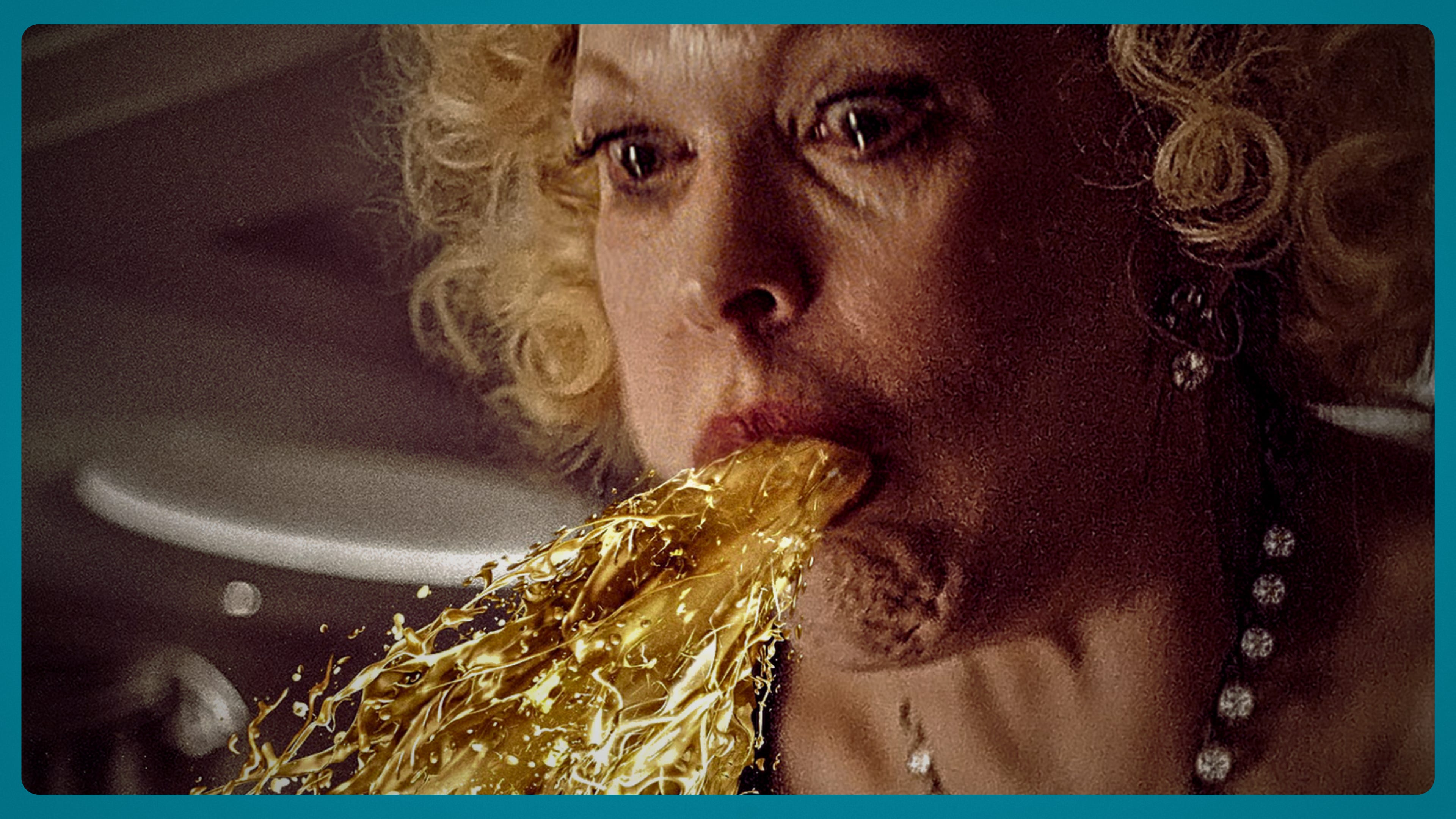
Let’s be honest: most expository dialogue is painful to listen to, a problem somehow magnified when world-building of any kind is involved. If your characters are just vomiting information into each other’s ears to help the audience keep up, you aren’t writing a scene – you’re writing a Wikipedia page summary.
There have been many hacks suggested over the years to fix this issue with your scripts, but I think most of them are junk. There’s only one way I’ve ever found effective and we’re going to get into why by taking a look at some examples from one of the greatest filmmakers to ever live. We’re also going to consider why the so-called “pope in a pool”, a solution proposed by the most influential screenwriting guide of all time, is complete and utter shit akin to a phrase my father used all the time – “like putting lipstick on a pig.”
Let’s start with a simple question: what is exposition?
You’d think anyone setting out to write a screenplay would understand its definition, but that’s not nearly the case. Exposition is a comprehensive explanation of any element of your story, from who characters are and what they want, to the objectives of a mission, to the rules of a mythological item.
A common synonym for this is “info dump”.
The short of it is: any explanation of anything that is not commonly understood by your audience (like this explanation of what exposition is).
So, why is so much exposition bad?
Well, first and foremost: it’s boring.
Second: it requires passive participation from your audience and audiences should never passively participate in your story. They should be leaning in, trying to keep up, trying to work things out for themselves. Participants don’t get bored. Imagine yourself at a loud party. You’re talking to someone, but you can’t hear them. You have to lean in, trying to pull words out of the cacophony. If the volume was fine, your brain might otherwise wander to whether you left the garage open or what you’re going to have for lunch tomorrow.
Third: it’s lazy and lazy scripts rarely get you screenwriting work.
Here’s the golden rule, I believe: No matter how quickly you need to get through a scene, no matter how long the scene has become, you cannot – ever, not ever – just tell the audience what it needs to know by having one character say aloud what amounts to a summary of facts.
No, you cannot make this work by writing really snappy dialogue.
No, you cannot make this work by having another character constantly interrupt or crack jokes or anything like that.
No, you cannot make this work by distracting the audience from your info dump by putting “the pope in a pool”, as Blake Snyder’s Save the Cat!: The Last Screenwriting Guide You’ll Ever Need claims (more on that later).
No, you cannot make this work by any combination of the previous examples.
The only way this will ever work is the introduction of conflict of some kind.
And no, this doesn’t mean two characters fighting in any way. It means a struggle of some kind.
With my own writing, the solution is most often about conflicting desires – which are further complicated by how characters speak or don’t speak, meaning their willingness or reticence with language, how conscious or unconsciously dis/honest they are about the subject, and so on.
Another way I’d describe what I try to do – and what I look for in great writing – is a dance in which one POV tries to lead while their dance partner is trying to do the same…all as the tempo keeps changing on them.
I think this dance metaphor is one of the better ones I’ve heard about good exposition, but I need to say it isn’t mine. I picked it up somewhere along the way, and now it’s mine to share with you.
In the next section, I’ll explain better what this dance is about.
Okay, let’s look at some great examples of conflict-driven “info dumps” in film. Each comes to you from Steven Spielberg, who is a master of exposition, as far as I’m concerned. Most often, he is so successful at it that there’s almost no subsequent need for info dumps in his films.
Example 1: The Sunday school scene in Raiders of the Lost Ark (1981).
Or: Indiana Jones and Marcus Brody explain the Ark of the Covenant to the FBI agents.
Let’s look at this as a dance, like I just said. Two points of view with conflicting desires. That might sound confusing, since there are four characters in this scene, but multiple characters can make up a single POV in my mind.
That’s what Indy and Brody are here. The FBI agents are the other POV. These POVs/partners are both trying to take the lead, to control the conversation, but whenever they get control, the partner changes the tempo with new, surprising information.
Example 2: The Grail lore scene in Indiana Jones and the Last Crusade (1989).
This scene offers up a twist on the dynamic of Raiders’ info dump because Walter Donovan, the wealthy man who has summoned Indiana Jones to his penthouse apartment, is armed with the twist revelation that Indy’s father has been captured by the Nazis. Unlike Raiders, Last Crusade’s call to action is deeply personal for Indy.
Again, both points of view have conflicting desires and each keeps changing the tempo on the other. The effect is that the tension of the scene keeps ratcheting up.
There’s also a brilliant additional layer that is only appreciable in hindsight, which is that Donovan is manipulating Indy – and the audience – the whole time.
Example 3: The ferry scene in Jaws (1975) – one of several info dump scenes in Jaws.
This scene is shorter than the last two and, at first glance, you might not even call it an exposition scene…but it is. It’s world-building and it provides context for the entire film to come. Perhaps more interestingly, the info dump here could’ve actually been spat out in 20 seconds, which almost anyone would’ve forgiven in a script. Spielberg chooses to turn it into a suspense sequence. He takes a piece of relatively straightforward information and makes it interesting — and tense.
Anyway, so, the mayor and his cronies must explain to Chief Brody all the economic reasons why Amity can’t shut down its beaches. Conflict drives this scene, from the way the information is delicately, politically doled out to the progress of the ferry to swimming Boy Scouts Brody believes are in danger of being eaten by a shark.
Two POVs/dancers with conflicting desires, both trying to take the lead. Who comes out on top in the end? Well, the mayor does — and a kid soon dies because of it.
Example 4: The Mr. DNA scene in Jurassic Park (1994).