

On Screenwriting: TOP GUN: MAVERICK Is a MasterClass on How to Introduce Protagonists
On Screenwriting: TOP GUN: MAVERICK Is a MasterClass on How to Introduce Protagonists
A breakdown of one of the many reasons why TOP GUN: MAVERICK is f@cking amazing blockbuster film

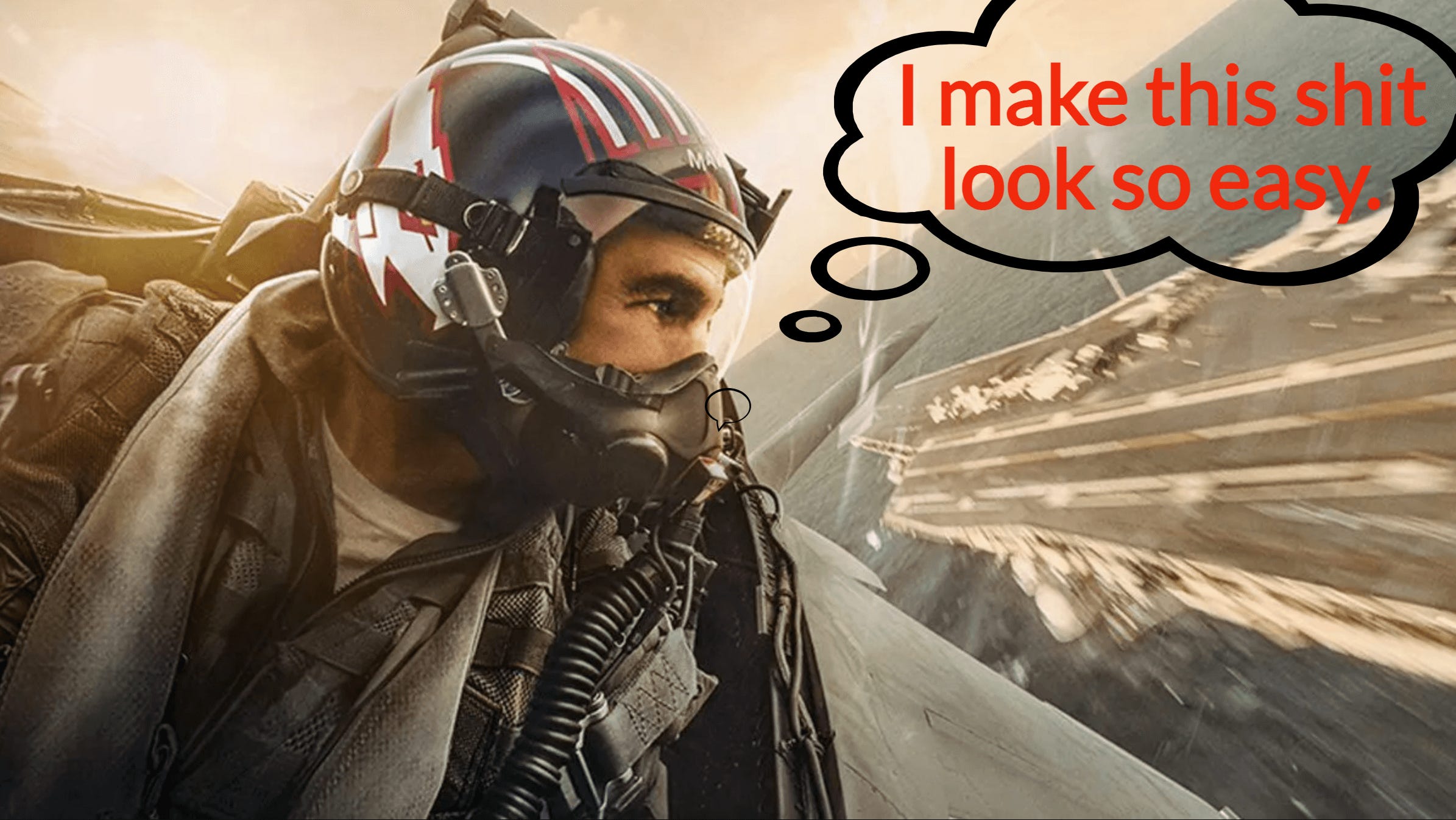
Let’s flash back to a better, more hopeful time…2022. Before the strikes, before the studios and streamers decided to napalm Hollywood so their CEO’s can afford new yachts, when a single film managed to make us all feel like we used to when we went to the movies as kids.
That film? TOP GUN: MAVERICK.
Unlike almost everyone else I knew, I had to see the film in its third week of release. By then, I’d heard from every direction that it was great with a capital G. And after its opening sequence, I had no doubt it would be exactly that. Let me explain why, which might interest fellow screenwriters and, more broadly, storytellers interested in economical narratives — as well as help make sense of how a sequel to a thirty-six-year-old action-drama film scored an Academy Award nomination for Best Picture.
For context, I had one concern when TOP GUN: MAVERICK was announced: If Maverick’s journey in TOP GUN (1986) was to go from dangerous self-centered “maverick” his fellow pilots are afraid of to team player who knows how to check his ego for the greater good, where would they take the character in the second film?

TOP GUN: MAVERICK isn’t just a sequel, as no film should ever be. It must re-introduce characters and present new challenges/character arcs. In the case of MAVERICK, it has the added challenge of re-introducing a character after, as I said, thirty-six years away from the big screen.
The filmmakers — including screenwriters Ehren Kruger, Eric Warren Singer, and Christopher McQuarrie and director Joseph Kosinski — would’ve no doubt been faced with the following questions about how to start TOP GUN: MAVERICK:
1) Who is Maverick (Tom Cruise)?
2) What did he learn from the first film?
3) Is he still a maverick?
4) What will his character obstacle be 36 years later?
Let’s explore them in greater detail now.
Question 1: Who is Maverick?
He’s a test pilot with the US Navy, a past as a fighter pilot, and, judging by his motorcycle and penchant for riding it sans helmet, a need for dangerous speed. Mission accomplished without dialogue and in an incredibly economical minute or so.

Question 2: What did Maverick learn from the first film?
He is immediately faced with a threat to his fellow pilots: they will lose their jobs if he doesn’t selflessly put his life on the line to reach Mach 10 and prevent the US Navy from replacing them with drones.
Okay, he learned quite a bit, apparently.
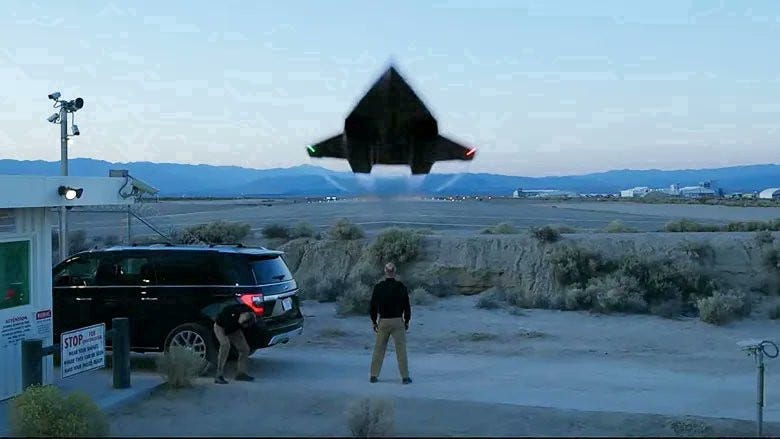
Question 3: Is Maverick still a maverick?
Considering that his decision is to defy orders to protect his fellow pilots — put others first — we can confidently answer yes to this question. This demonstrates what he learned from the first film, but also the limits of the lesson.
The limits are demonstrated when Maverick accomplishes his goal, saving his fellow pilots’ futures. Instead of being satisfied with this, he pushes the throttle forward, hits Mach 10.4, and destroys the test plane.
Yep, still a Maverick fo sho.

Question 4: What will Maverick’s character obstacle be 36 years later?
This answer arrives with the film’s inciting incident. He’s disciplined by Rear Adm. Cain (Ed Harris), who’d like Maverick to lose his wings. In a twist, Maverick is instead told he’s returning to Top Gun to become a teacher.
This is Maverick’s obstacle. He’s spent his entire career as a pilot, with no other ambitions. He was previously fired as a teacher for lacking the temperament to educate, in fact. But now, he will be faced with his final challenge: taking what he’s learned and passing it on.
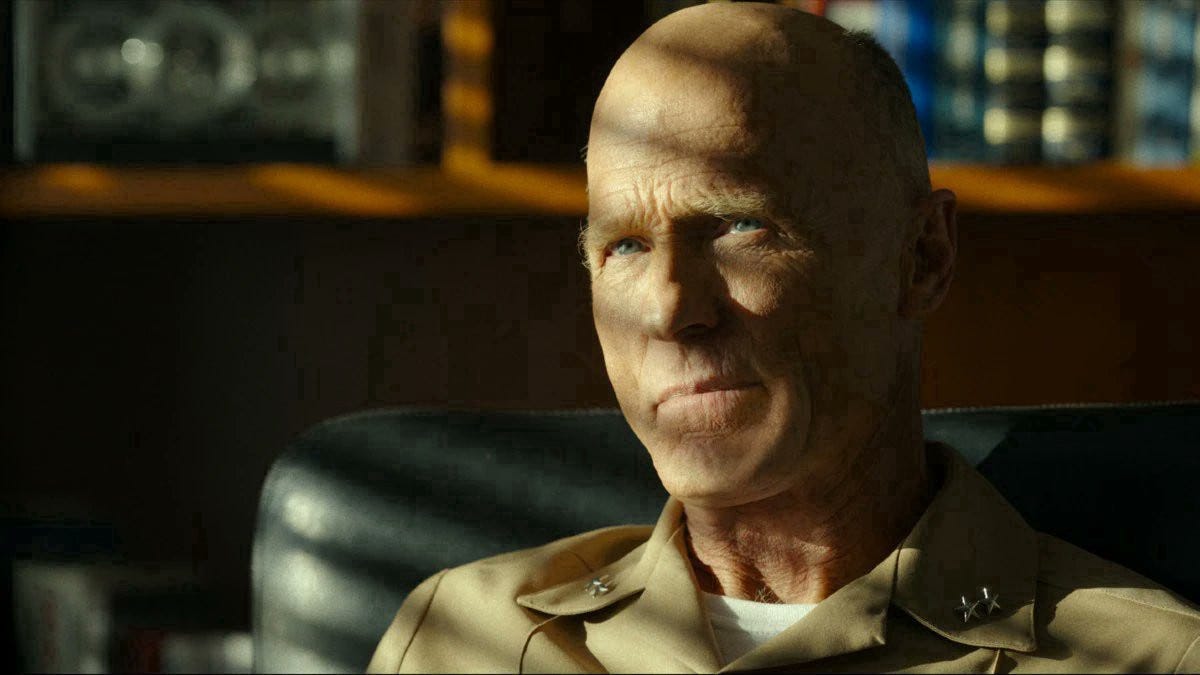
We’ll soon discover this role as a teacher will also overlap with his role as the surrogate father of Rooster (Miles Teller), the son of Goose, Maverick’s best friend whose death in the original TOP GUN both still blame Maverick for.
What Maverick lacks as a teacher, he also lacks as a father.
This is his chance to fix both.

There you go. Eleven or so very economical minutes into the film, and you know everything you need to know about Maverick. Every moment of action was conceived and executed specifically to dramatize all this backstory and set up Maverick’s character arc in TOP GUN: MAVERICK.
Back to me and my experience watching TOP GUN: MAVERICK now.
At this point in the film, it was so painfully obvious that the filmmakers were operating at a storytelling level well beyond what most Hollywood films offer these days, I sat back, grinning, utterly confident I’d enjoy every minute of the experience.
And I did enjoy it — loved it is more accurate. I laughed. I cheered. I cried a lot, as did my wife, because we were so caught off-guard by a cinematic experience that manages to be nostalgic, refreshingly new, and brilliantly executed in the 2020’s. TOP GUN: MAVERICK is how sequels, reboots, requels — whatever you call them — should work all the time. The filmmakers make it look so easy here, you’re left wondering why it doesn’t.
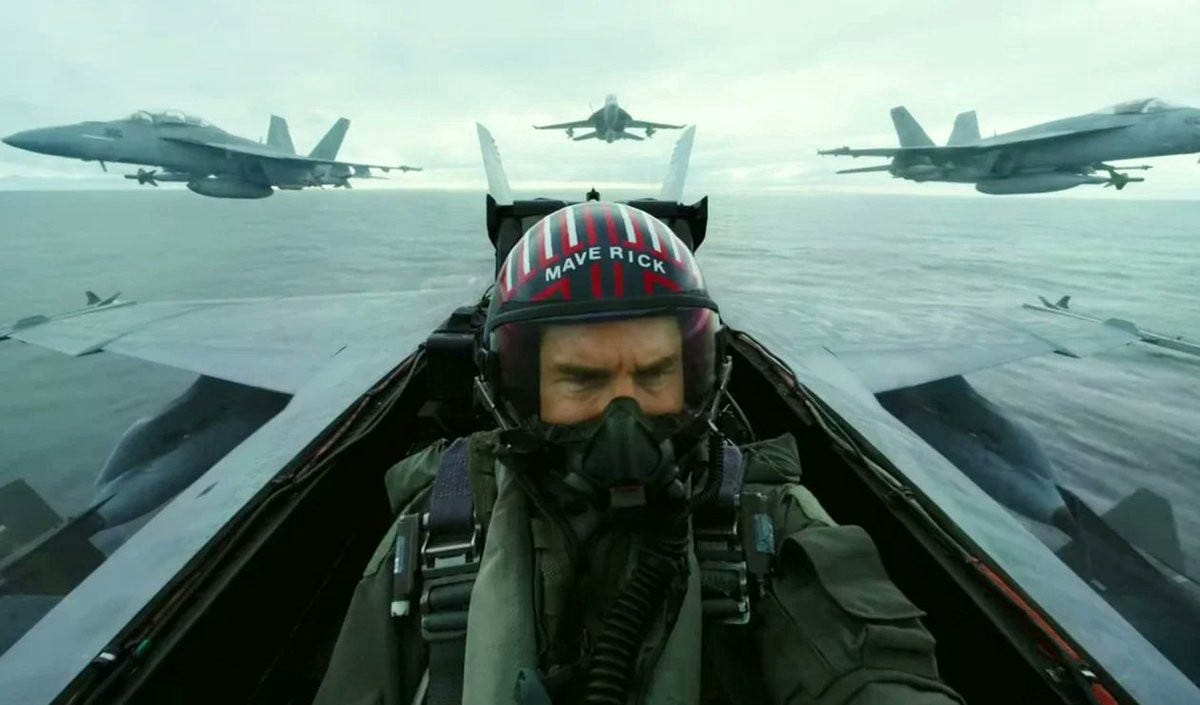
If this article added anything to your life but you’re not up for a paid subscription, please consider buying me a “coffee” so I can keep as much of this newsletter free as possible for the dreamers who couldn’t afford it otherwise.
My debut novel PSALMS FOR THE END OF THE WORLD is out now from Headline Books, Hachette Australia, and more. You can order it here wherever you are in the world:
I totally agree.